
A Labor Day weekend car accident can affect your health, work, transportation, and family plans within seconds. Your first priorities should be safety and medical care. After that, reporting the collision, preserving evidence, notifying the proper insurers, tracking your losses, and protecting legal deadlines can help support an injury claim.
Holiday travel can make evidence harder to preserve. Witnesses may return home, rental vehicles may be returned, surveillance recordings may be overwritten, and damaged vehicles may be repaired or moved to salvage yards. Acting promptly can help preserve information that may explain how the crash happened and how the injuries affected your life.
The 10 steps below can help you protect your health and your New Jersey injury claim:
- Get to a safe location and call for help.
- Seek medical care and describe every symptom.
- Report the collision accurately.
- Photograph and record the scene.
- Collect driver, witness, and travel information.
- Avoid fault debates and social media posts.
- Notify the insurer without signing away rights.
- Keep a complete injury claim file.
- Review New Jersey fault, PIP, and lawsuit rules.
- Protect filing deadlines and time-sensitive evidence.
Freeman Law Center, LLC helps injured people review insurance coverage, document losses, communicate with insurers, and protect legal deadlines. No attorney can promise a specific result, and the value of a claim depends on the facts, available coverage, medical evidence, and applicable law.

Why Labor Day Weekend Car Accidents Need Prompt Attention 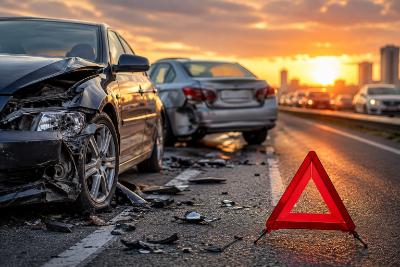
New Jersey roads can become busier during holiday weekends, including the New Jersey Turnpike, Garden State Parkway, Interstate 78, Interstate 80, Route 3, Route 46, and roads leading toward Shore communities. Drivers may be using unfamiliar routes, traveling with passengers, returning from gatherings, or driving late after a long day.
Busy roads do not prove that a driver was negligent. They can create more situations in which rear-end collisions, unsafe lane changes, intersection crashes, motorcycle accidents, pedestrian injuries, and multi-vehicle collisions occur. A holiday schedule can also make it harder to locate witnesses, obtain business surveillance recordings, inspect rental vehicles, or preserve damaged vehicles after the weekend.
1. Protect Your Safety and Call for Help
Move away from active traffic when you can do so safely. Do not stand between damaged vehicles or remain in a travel lane. Turn on hazard lights when appropriate and move to a protected location if the vehicle can be moved safely.
Call 911 when:
- Someone may be injured.
- Traffic is blocked.
- A vehicle cannot be moved safely.
- A driver appears impaired.
- Fuel, smoke, fire, debris, or another hazard is present.
- You are unsure whether emergency help is needed.
Follow instructions from police officers, emergency medical personnel, firefighters, and dispatchers. Do not move a seriously injured person unless leaving that person in place creates an immediate danger.
Your safety and medical needs come first. Evidence can be collected only when the scene is safe enough to do so.






2. Seek Medical Care and Describe Your Symptoms Clearly
Some injuries are obvious at the scene. Other symptoms may become more noticeable after the initial shock of the crash has passed. Seek emergency care for severe pain, confusion, loss of consciousness, weakness, numbness, breathing problems, significant bleeding, or reduced movement.
For symptoms that do not appear to require emergency treatment, arrange a prompt medical evaluation. Tell the medical provider:
- When and how the crash occurred.
- Where you feel pain or discomfort.
- Whether symptoms have changed.
- Whether you struck your head.
- Whether you lost consciousness or felt confused.
- How the symptoms affect sleep, walking, lifting, driving, work, or household tasks.
- Whether you had symptoms or treatment involving the same body part before the collision.
Do not minimize symptoms, but do not exaggerate them. Accurate reporting helps medical providers evaluate your condition and creates a record of what you experienced.
Follow reasonable treatment instructions, attend appointments, and keep copies of discharge papers, referrals, prescriptions, bills, test results, and work restrictions. A gap in care may create health concerns and may lead an insurer to question whether the symptoms were connected to the collision.
3. Report the Collision Accurately
Give police officers factual information about what you saw, heard, and experienced. Do not guess about speed, distance, fault, or another driver’s conduct. Tell the officer when you do not know an answer.
New Jersey law generally requires a written accident report within 10 days when a crash causes injury, death, or more than $500 in property damage to any one person. A separate written report is generally not required when a law enforcement officer submits the required report. Ask the responding agency whether another report is needed in your situation.
Keep the incident or case number and ask how to obtain the completed police crash report. Review the report when it becomes available. If you find a factual error, contact the reporting agency and ask about its correction or supplemental-report procedure.
A police report does not automatically decide civil liability. It may preserve:
- Driver and vehicle identities.
- Insurance information.
- Witness names and contact details.
- Diagrams and roadway information.
- Citations or reported violations.
- Weather, lighting, and road conditions.
- Officer observations and statements made at the scene.
Mr. Freeman represented me in a child custody case during the beginning of difficult times of Covid. As a father, I was at first worried about what the outcome of the case Maybe. However, Mr. Freeman assured me he would get me my rights. Thanks to knowledgeable Mr. Freeman and his professional staff, I was granted my rights. Cindy & Mr. Freeman were able to answer all my questions without delay. Highly recommend! SAM BEAST If you need a great family lawyer I recommend the freeman law center without hesitation. My life was a complete shambles because of the divorce I had to go through I didn’t know that i could feel so bad. The efforts that I received from Brian was outstanding and I can’t put in words how much I appreciated the way I was treated by his staff. Their slogan “Quality and Commitment” was not just words it was action. RON THATCHER
4. Photograph and Record the Scene
When you can act safely, take photographs and short videos of:
- Vehicle positions.
- Damage to every involved vehicle.
- License plates.
- Skid marks, debris, and fluid trails.
- Traffic lights, signs, and lane markings.
- Construction areas, blocked views, or roadway defects.
- Road, weather, and lighting conditions.
- Visible injuries.
- Nearby businesses, homes, doorbell cameras, or traffic cameras.
- Towing-company information.
Take wide views that show the full scene and close images that show details. Photograph your vehicle again before repairs, disposal, or transfer to a salvage yard.
Save the original files. Images sent through text messages, messaging applications, or social media may lose quality or metadata. Back up the files to another device or secure storage location.
Write down the time, location, direction of travel, lane position, traffic signal, and anything else that may be difficult to remember later. A short written account prepared while the details are fresh can help you give consistent information to medical providers, insurers, and your attorney.
5. Collect Driver, Witness, and Travel Information
Obtain the following information from each driver:
- Full name.
- Home address.
- Telephone number.
- Driver’s license information.
- Vehicle registration.
- License plate number.
- Insurance company.
- Policy number.
- Vehicle owner’s name and contact information.
If the vehicle is owned by an employer, rental company, delivery company, government agency, or rideshare platform, record that relationship. Photograph insurance cards and registrations when possible.
Ask witnesses for their names, telephone numbers, email addresses, and home states. Holiday witnesses may return home quickly, so accurate contact information matters.
Preserve travel records that may establish timing, location, vehicle use, or expenses, including:
- Rental agreements.
- Hotel receipts.
- E-ZPass records.
- Fuel and parking receipts.
- Rideshare confirmations.
- Event tickets.
- Navigation history.
- Dash-camera footage.
- Photographs taken before or after the crash.
- Messages about the trip.
- Towing and storage records.
Do not assume that a business or government camera recording will be saved. Many systems automatically overwrite footage. A prompt preservation request may be needed.
6. Avoid Debating Fault or Posting Online
Remain calm and exchange the information required after a collision. Do not argue with another driver or make detailed statements about fault. A person may have an incomplete view of what happened, especially after a sudden impact.
Avoid statements such as:
- “I am fine.”
- “I am sorry.”
- “I did not see you.”
- “It was my fault.”
- “My injuries are not serious.”
A polite statement does not always establish legal responsibility, but unnecessary comments can be misunderstood or taken out of context.
Do not post crash photographs, location information, medical updates, travel activities, exercise, work activities, or opinions about the collision on social media. Insurers and opposing parties may review public posts. A photograph may not show the pain, medication, assistance, or recovery time associated with an activity.
Ask family members and friends not to post information about your injuries, activities, or claim.
7. Notify the Insurer Without Signing Away Rights
Report the crash to your automobile insurer within the period required by the policy. Ask for:
- The claim number.
- The adjuster’s name and contact information.
- Vehicle inspection instructions.
- Towing and storage instructions.
- Personal Injury Protection forms.
- Property-damage procedures.
- Rental-vehicle information, if available.
New Jersey Personal Injury Protection coverage, commonly called PIP, generally pays covered medical expenses for you and other people covered under the policy regardless of who caused the crash. Depending on the policy, PIP may also provide certain income-continuation or essential-services benefits. Deductibles, coverage limits, health-insurance coordination, and policy elections can affect payment.
An insurer may request a recorded statement, medical authorization, repair release, property-damage release, or settlement release. Read each document carefully. A broad medical authorization may allow access to records unrelated to the collision. A settlement release may end further claims even if treatment is continuing or additional symptoms develop.
Do not ignore insurer requests. Ask questions, keep copies, and obtain legal advice before signing a document that you do not understand.
8. Keep a Complete Injury Claim File
Create one paper or digital file for all crash-related information. Include:
- Medical records and bills.
- Explanation-of-benefits forms.
- Prescription and medical-equipment receipts.
- Wage statements.
- Employer letters and work restrictions.
- Mileage and transportation expenses.
- Towing, storage, repair, and rental-vehicle charges.
- Photographs of injuries and healing.
- Photographs of physical limitations or assistive devices.
- Insurance letters, emails, forms, and claim numbers.
- Police reports and witness information.
- Notes about pain, sleep, mobility, work, and household tasks.
Keep a simple daily or weekly record of how the injuries affect you. Focus on specific facts, such as needing help with stairs, missing work, sleeping in a chair, stopping an activity early, or relying on another person for transportation.
An injury claim may include medical expenses, lost income, reduced earning capacity, pain, disability, property damage, and other supported losses. The available recovery depends on fault, insurance coverage, policy terms, medical proof, and the effect of the injuries.
9. Understand New Jersey Fault, PIP, and Lawsuit Rules
New Jersey follows modified comparative negligence. You may recover damages when your negligence is not greater than the negligence of the party, or the combined negligence of the parties, from whom you seek recovery. Any award is reduced by your percentage of fault.
For example, if a factfinder determines that your damages equal $100,000 and that you were 20 percent at fault, the damages would generally be reduced by 20 percent. If your fault is greater than the fault of the party or combined parties from whom you seek recovery, the comparative-negligence rule may prevent recovery from those parties.
Your automobile policy’s lawsuit option can also affect a claim for pain and suffering. Under a standard policy:
- The unlimited right-to-sue option generally preserves the right to pursue non-economic damages without the injury threshold imposed by the limited option.
- The limited right-to-sue option generally restricts recovery for pain and suffering unless the injury meets a category identified by New Jersey law.
- Economic losses, PIP benefits, and other insurance claims may be treated differently.
A claim may involve several forms of coverage, including PIP, bodily injury liability, uninsured motorist coverage, underinsured motorist coverage, collision coverage, rental coverage, and health insurance. A policy review can help identify available benefits, exclusions, deductibles, limits, and notice requirements.
For more information about car accident representation, visit:
https://www.freemanhugheslaw.com/jersey-city-car-accident-attorney/
For broader personal injury information, visit:
https://www.freemanhugheslaw.com/jersey-city-personal-injury-lawyer/
10. Protect Filing Deadlines and Time-Sensitive Evidence
New Jersey generally applies a two-year filing period to personal injury actions. The correct deadline may change based on the facts, parties, age of the injured person, date the claim accrued, or another legal rule. Do not assume that every claim has the same deadline.
Claims involving a public entity or public employee often require a formal notice of claim within 90 days after the claim accrues under the New Jersey Tort Claims Act. This issue may arise when a government vehicle, public employee, NJ Transit vehicle, traffic-control problem, roadway defect, or public property contributed to the collision.
A two-year lawsuit period does not replace a possible 90-day public-entity notice requirement. Missing the earlier deadline can affect the claim.
Evidence may disappear long before a filing deadline. Surveillance video may be overwritten, vehicles may be repaired or destroyed, electronic data may be lost, and witness memories may fade. An attorney may send preservation letters, inspect vehicles, request recordings, identify public entities, and evaluate the applicable deadlines.
The firm provides additional information about filing a New Jersey car accident lawsuit here:
How a New Jersey Car Accident Attorney Can Help
A lawyer can review the facts, identify responsible parties, investigate fault, request surveillance recordings, preserve vehicle and electronic data, obtain police records, interview witnesses, identify insurance coverage, coordinate PIP issues, collect medical and wage evidence, communicate with adjusters, and evaluate whether a lawsuit is appropriate.
Legal representation may also help when:
- The insurer disputes fault.
- Several vehicles were involved.
- A commercial, rental, rideshare, or government vehicle was involved.
- The available insurance coverage is unclear.
- The injuries require ongoing treatment.
- The insurer requests a recorded statement or broad authorization.
- A settlement offer arrives before the medical condition is understood.
- A public-entity notice deadline may apply.
You can learn more about Brian C. Freeman here:
https://www.freemanhugheslaw.com/new-jersey-attorney-brian-freeman/
Discuss Your New Jersey Car Accident Claim
A Labor Day weekend crash can leave you managing medical appointments, missed work, vehicle repairs, travel changes, and insurance calls at the same time. Freeman Law Center, LLC serves clients from offices in Jersey City and Montclair, New Jersey. The firm offers initial consultations at no charge and provides personal attention backed by more than 30 years of New Jersey legal experience.
Call (201) 222-7765 or request a consultation through:
https://www.freemanhugheslaw.com/contact/
This article is for informational purposes only. It is not legal advice and does not create an attorney-client relationship. Consult an attorney about the facts and deadlines that apply to your situation.