
A pool accident in New Jersey may support a personal injury claim when a homeowner, hotel, pool operator, public entity, contractor, or equipment manufacturer failed to use reasonable care. Liability often depends on who controlled the pool area, what hazard caused the injury, whether the responsible party knew or should have known about the danger, and whether the unsafe condition caused measurable harm.
Freeman Law Center, LLC helps injured people investigate serious pool accidents, preserve evidence, identify responsible parties, and review available insurance coverage. These claims can become more complicated when a child is injured, several businesses share control of a hotel pool, defective equipment contributes to the accident, or a public entity owns the facility.

When Can a Pool Accident Create Liability in New Jersey? 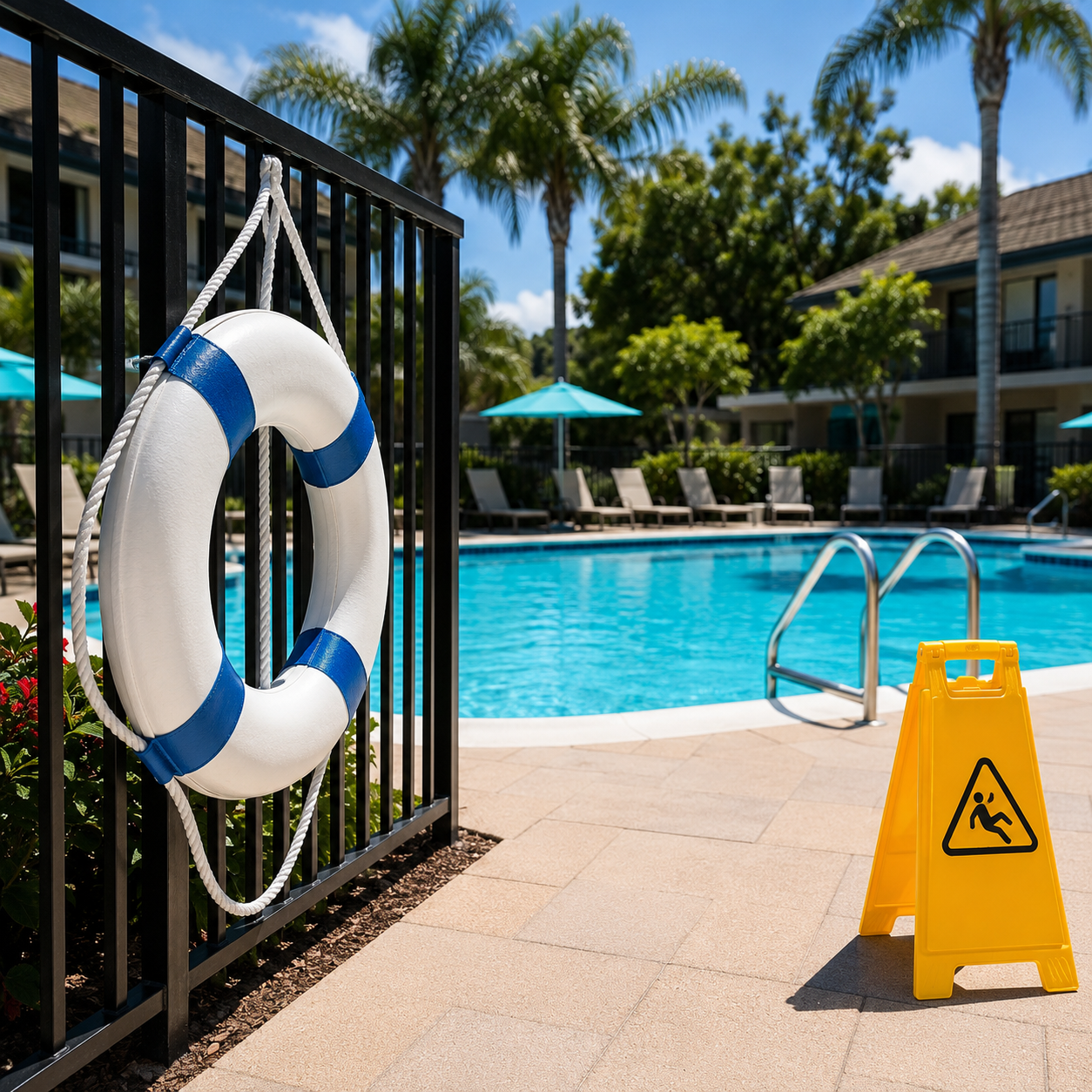
A pool owner or operator is not automatically responsible whenever someone is injured. A negligence claim generally requires evidence showing that:
- A person or organization owed the injured person a duty of reasonable care
• That person or organization breached the duty
• The breach caused or contributed to the accident
• The injured person suffered damages
Pool accident liability often involves New Jersey premises liability law. The main question is whether the person or organization controlling the property took reasonable steps to identify, correct, or warn about foreseeable dangers. The answer may depend on the type of property, the injured person’s reason for being there, the person’s age, the nature of the hazard, and the owner’s knowledge of the condition.
For more information about unsafe-property claims, visit:
https://www.freemanhugheslaw.com/new-jersey-slip-and-fall-law-an-overview/
Common causes of pool injuries include:
- Slippery pool decks, locker rooms, stairs, and walkways
• Broken gates, fences, latches, ladders, or handrails
• Defective drain covers or dangerous suction
• Cloudy water that prevents staff from seeing a submerged swimmer
• Poor lighting or unclear depth markings
• Diving boards, slides, or other equipment that has not been maintained
• Missing warnings or poorly placed safety signs
• Unsafe chemical levels
• Inadequate supervision or a delayed emergency response
• Overcrowding and poor control of people entering or leaving the water
• Electrical hazards near the pool or surrounding deck
• Defective alarms, pumps, filters, or safety equipment
New Jersey regulates public recreational bathing facilities under N.J.A.C. 8:26. These rules address facility operation, inspections, water quality, safety equipment, trained personnel, signs, visibility, maintenance, and supervision. A regulatory violation may help support a claim, but liability still requires a review of the facts, negligence, causation, defenses, and damages.
The New Jersey Department of Health publishes the public recreational bathing rules at:
https://www.nj.gov/health/ceohs/documents/phss/recbathing.pdf
Who May Be Responsible for a Pool Accident?
More than one person or business may share responsibility for a pool accident. Potentially responsible parties can include:
- A homeowner
• A landlord or apartment complex owner
• A hotel, resort, or property management company
• A condominium or homeowners association
• A pool operator or pool management company
• A lifeguard or staffing company
• A maintenance, cleaning, or water-testing contractor
• A construction or repair contractor
• A manufacturer or seller of defective pool equipment
• A city, county, school district, or other public entity
The party named on the property deed is not always the only party responsible. Contracts, maintenance records, staffing agreements, leases, association rules, and service invoices may show which person or organization controlled the area or had responsibility for a specific safety task.
Homeowner Liability for Private Pool Accidents
A homeowner may be responsible when an unsafe private pool condition causes an invited guest’s injury. Examples can include a broken deck board, unsecured gate, defective ladder, hidden drop-off, exposed wiring, damaged drain cover, or known equipment problem that was not repaired or disclosed.
Supervision may also become part of the investigation. A homeowner who agrees to watch children near a pool but leaves the area may face different questions from a homeowner who clearly left supervision with the children’s parents. Relevant facts may include:
- The ages and swimming abilities of the children
• The number of swimmers
• Who agreed to supervise
• Whether alcohol was being served
• Visibility from the supervision area
• The location of rescue equipment
• Whether gates, alarms, or barriers were working
• Whether the pool was open, closed, covered, or unattended
Unauthorized entry creates another issue. Property owners generally owe different duties to people who enter without permission. Children, though, may not understand the danger of an accessible pool. An unfenced pool, a broken gate, or a latch that a young child can open may create a serious safety concern. Local building, fencing, and barrier requirements may also affect the investigation.
Homeowners insurance may provide coverage, but coverage does not establish liability. An insurer may dispute how the accident happened, argue that the condition was obvious, or claim that another adult failed to supervise a child. Photographs, witness accounts, prior repair requests, maintenance records, and evidence of earlier incidents may become central to the claim.






Hotel, Apartment, and Condominium Pool Liability
Commercial pool cases often involve several parties. A hotel may own the property while a management company operates it. An outside contractor may test the water, service pumps, maintain the deck, repair equipment, or provide lifeguards. An apartment complex or condominium may divide responsibilities among an owner, property manager, association, and maintenance vendor.
Hotels and other businesses that invite guests onto their property must use reasonable care under the circumstances. A hotel may face liability when staff ignored repeated complaints about a loose handrail, failed to correct a recurring drainage problem, allowed water to become too cloudy for safe observation, or kept damaged equipment available for use.
Hotel pools may fall within New Jersey’s public recreational bathing rules even when located on private commercial property. Certain facilities may qualify for limited exemptions from lifeguard or first-aid staffing requirements. Those exemptions do not remove other operational, maintenance, water-quality, supervision, or safety duties.
For related information about falls on unsafe property, visit:
Public Pool and Municipal Liability
A city, county, school district, or another public entity may operate a swimming pool, splash area, recreation center, or aquatic facility. These cases can involve hazards similar to those found at privately owned pools, but different procedural rules may apply under the New Jersey Tort Claims Act.
A person seeking compensation from a public entity may need to serve a formal notice of claim within 90 days after the claim accrues. Limited procedures may allow a late notice in some circumstances, but strict requirements apply. Identifying the correct public entity can also be difficult when several agencies or contractors share responsibility.
A public pool claim may involve:
- Missing or inattentive lifeguards
• Unsafe water conditions
• Poorly maintained drains, ladders, railings, or decks
• Failure to follow inspection procedures
• Inadequate emergency equipment
• A delayed rescue or first-aid response
• Unsafe crowd levels
• Failure to close the pool after staff discovered a hazard
• Defective gates, barriers, alarms, or access controls
Governmental immunity may limit certain claims. Liability against a public entity is not evaluated in the same manner as an ordinary claim against a private homeowner or business. Prompt legal review can help determine which notice rules, immunities, and deadlines may apply.
Information about filing a claim involving the State of New Jersey is available at:
https://www.nj.gov/treasury/riskmgt/tort-notice.shtml
Mr. Freeman represented me in a child custody case during the beginning of difficult times of Covid. As a father, I was at first worried about what the outcome of the case Maybe. However, Mr. Freeman assured me he would get me my rights. Thanks to knowledgeable Mr. Freeman and his professional staff, I was granted my rights. Cindy & Mr. Freeman were able to answer all my questions without delay. Highly recommend! SAM BEAST If you need a great family lawyer I recommend the freeman law center without hesitation. My life was a complete shambles because of the divorce I had to go through I didn’t know that i could feel so bad. The efforts that I received from Brian was outstanding and I can’t put in words how much I appreciated the way I was treated by his staff. Their slogan “Quality and Commitment” was not just words it was action. RON THATCHER
What Evidence Can Help Prove a Pool Injury Claim?
Pool scenes can change within minutes. Water dries, staff move signs, damaged equipment is replaced, chemical levels change, and surveillance systems may overwrite recordings. Early evidence preservation can affect the strength of a claim.
Useful evidence may include:
- Photographs and videos of the pool, deck, gate, signs, lighting, drains, and equipment
• Names and contact information for witnesses
• Incident reports and emergency-response reports
• Medical records, bills, and discharge instructions
• Surveillance footage
• Inspection, cleaning, and maintenance logs
• Water-quality and chemical-testing records
• Lifeguard schedules and training records
• Prior complaints or injury reports
• Repair invoices and service contracts
• Hotel procedures, leases, association rules, or pool policies
• Weather records when outdoor conditions affected the area
• Product manuals, recalls, and equipment warnings
• Communications among owners, managers, and contractors
Take wide photographs that show the entire area and close photographs that show the specific hazard. Keep the shoes and clothing worn during a fall. Write down the sequence of events while the details remain fresh. Save text messages, emails, receipts, and reservation records connected to the visit.
Do not post conclusions about fault, descriptions of physical limitations, or photographs of activities on social media. Insurance representatives may review public posts when evaluating an injury claim.
The First Step of Divorce The Cost of DivorceRelated Videos
Callout
Evidence near a pool can disappear quickly. Photographs, witness information, maintenance records, and surveillance footage should be preserved as soon as possible.
Common Pool Accident Injuries
Pool accidents can cause injuries that require emergency care, surgery, rehabilitation, or long-term treatment. Common injuries include:
- Fractures and dislocations
• Torn ligaments and other soft-tissue injuries
• Concussions and traumatic brain injuries
• Neck, back, and spinal cord injuries
• Dental and facial injuries
• Cuts, scarring, and disfigurement
• Chemical burns or respiratory irritation
• Infections
• Electrical injuries
• Brain damage caused by oxygen deprivation
• Fatal drowning injuries
Near-drowning complications may require prompt medical evaluation even when the person initially appears stable. Persistent coughing, trouble breathing, confusion, chest pain, unusual fatigue, or loss of consciousness requires urgent medical attention.
What Compensation May Be Available?
A valid New Jersey personal injury claim may seek compensation for losses supported by evidence. Recoverable damages may include:
- Emergency care, hospitalization, surgery, and rehabilitation
• Future medical treatment
• Lost wages
• Reduced earning capacity
• Pain and physical limitations
• Emotional distress
• Scarring or disfigurement
• Out-of-pocket accident expenses
• Loss of enjoyment of daily activities
• Funeral and related losses in a wrongful death claim
The value of a claim depends on the evidence, available insurance coverage, degree of fault, medical prognosis, and long-term effect of the injury. No attorney can promise a specific settlement or verdict.
New Jersey Filing Deadlines
New Jersey generally requires a personal injury lawsuit to be filed within two years after the claim accrues. Exceptions may apply, so the exact deadline should be reviewed for the specific case.
The statute is available at:
https://lis.njleg.state.nj.us/nxt/gateway.dll/statutes/1/112/308
Claims involving a public entity may require a Tort Claims Act notice within 90 days. A person may lose important rights by waiting, even when the ordinary two-year period has not expired.
Delay can also lead to:
- Deleted surveillance footage
• Missing witnesses
• Repaired or replaced equipment
• Changed water conditions
• Incomplete maintenance records
• Lost communications
• Disputes about when notice was provided
How Shared Fault Can Affect a Pool Accident Claim
New Jersey follows modified comparative negligence. An injured person may recover damages when their percentage of fault is not greater than the combined percentage of fault assigned to the person or parties from whom recovery is sought. Any award is reduced by the injured person’s percentage of fault.
An insurer may argue that the injured person:
- Ran on the pool deck
• Ignored posted rules
• Dove into shallow water
• Entered a closed or restricted area
• Used equipment improperly
• Consumed alcohol
• Failed to supervise a child
These arguments do not automatically decide the claim. The investigation should also examine the design of the area, placement and clarity of warnings, age of the injured person, staffing, lighting, maintenance history, crowd levels, and whether the facility should have anticipated ordinary visitor behavior.
Steps to Take After a New Jersey Pool Accident
After a serious pool accident:
- Call 911 or seek immediate medical care
• Report the incident to the homeowner, manager, lifeguard, property manager, or public agency
• Ask for a copy of the incident report or written confirmation that a report was made
• Photograph the pool area, hazard, signs, gates, lighting, and equipment
• Collect witness names and contact information
• Preserve clothing, footwear, receipts, and reservation records
• Keep medical paperwork and proof of missed work
• Avoid signing a release before the injuries and future treatment needs are understood
• Avoid giving a recorded statement before understanding who requested it and why
• Contact an attorney promptly when a public entity, serious injury, child injury, defective product, or disputed hazard is involved
Information about the firm’s personal injury services is available at:
https://www.freemanhugheslaw.com/practice-areas/
Information about attorney Brian Freeman is available at:
https://www.freemanhugheslaw.com/new-jersey-attorney-brian-freeman/
Speak With a New Jersey Personal Injury Attorney
A pool accident can leave you and your family dealing with medical care, insurance calls, missed work, and uncertainty about who controlled the dangerous condition. Freeman Law Center, LLC represents injured people in Jersey City, Montclair, throughout New Jersey, and nearby areas.
Call (201) 222-7765 or use the contact page to discuss the accident and the steps that may help preserve your rights:
tel:+12012227765
https://www.freemanhugheslaw.com/contact/
This article is for informational purposes only and is not legal advice. Consult an attorney about your specific circumstances.