
Driving on New Jersey’s roads, you might encounter a variety of hazards—potholes, ice, and poorly designed roadways that can lead to accidents. These hazards are not only frustrating but can also cause significant damage to your vehicle, as well as severe injury. When such accidents happen, it’s important to understand the legal options available to you. If the road conditions that caused the accident are the fault of a government entity—be it local, county, or state—you might have grounds to file a claim against that public entity. This process, however, can be complex, so understanding the steps you need to take is crucial.

In New Jersey, claims against government entities are subject to specific rules, and in many cases, they are protected by “sovereign immunity,” which limits how and when you can sue the government. However, there are exceptions to this protection, particularly in cases involving poorly maintained roads or unsafe designs. This article will provide a comprehensive guide on how to proceed with making a claim for accidents caused by potholes, ice, or bad road design, and what to expect during the process.
Understanding the Dangers of Potholes, Ice, and Bad Road Design 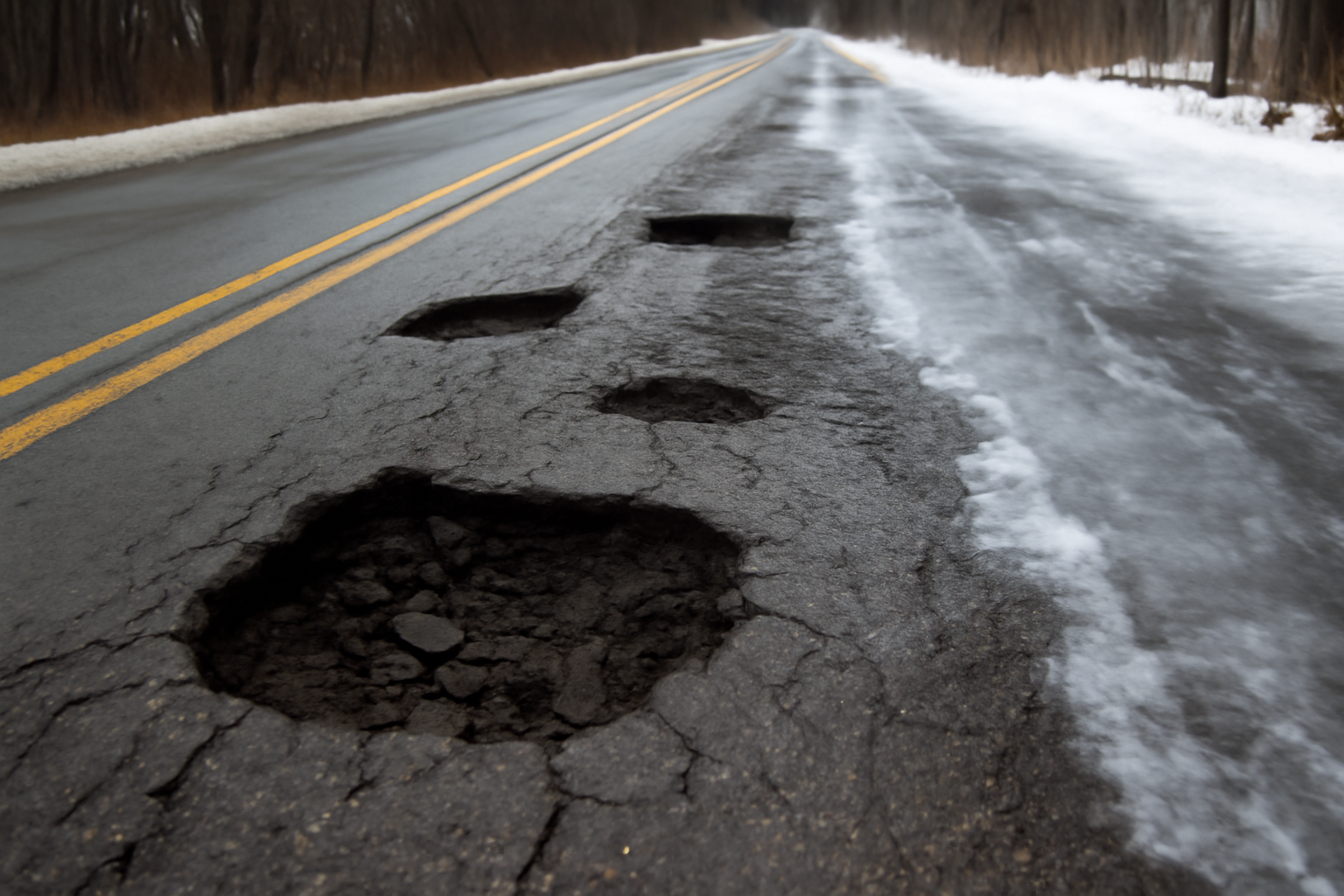
New Jersey, like many states in the U.S., is prone to harsh winters. The state often faces freezing temperatures, snowstorms, and ice buildup, creating hazardous driving conditions for motorists. Potholes are a common result of the freeze-thaw cycle, where water seeps into cracks in the road, freezes, and expands, causing the asphalt to break apart. These potholes can create major safety risks for drivers, especially if they are deep or widespread.
In addition to potholes, other road design issues can contribute to accidents. Poorly planned intersections, sharp curves, inadequate signage, or improper drainage systems can also lead to hazardous driving conditions. For instance, a road that doesn’t properly drain water may lead to standing water during rainy seasons, increasing the risk of hydroplaning. Similarly, roads that are not properly salted or cleared of ice during winter storms can cause vehicles to slip and crash.
In cases like these, a government agency may be liable for failing to maintain safe roads. However, proving that the government entity is at fault and filing a successful claim can be difficult, as public entities often have legal protections in place.






Can You Sue a New Jersey Public Entity for an Accident Caused by Road Conditions?
The short answer is yes, it is possible to sue a public entity in New Jersey for an accident caused by dangerous road conditions. However, this process is not as straightforward as filing a claim against a private individual or company. Government entities, including local municipalities, counties, and the state of New Jersey, enjoy certain legal protections that limit their liability in personal injury claims. These protections are part of New Jersey’s Tort Claims Act, which provides immunity to public entities for most accidents that occur on public roads.
That said, there are notable exceptions to this immunity. If the road conditions that caused your accident can be shown to be the result of negligence, and if it can be proven that the government agency knew about the hazardous condition and failed to fix it, you may have a valid claim. Additionally, if the government agency is found to have made a design flaw that contributed to the accident, such as improper placement of road signs, lack of proper drainage, or inadequate maintenance, you may be able to sue for damages.
It’s also important to note that New Jersey law requires a Notice of Claim to be filed within 90 days of the accident. This is a crucial step in the claims process and must be done in order to preserve your right to take legal action. If you fail to file the notice within the required time frame, you could lose your chance to recover compensation for your injuries.
Steps to Take After an Accident Caused by Bad Road Conditions
If you are involved in a car crash caused by a pothole, ice, or poor road design in New Jersey, there are several important steps you should take to protect your legal rights and increase your chances of success in a claim against a public entity.
- Report the Incident: Immediately report the accident to law enforcement. An official police report will be crucial in documenting the circumstances surrounding the crash. The report should include details such as the location, weather conditions, the condition of the road, and any other relevant factors.
- Document the Scene: If it’s safe to do so, take photos of the accident scene. Capture images of the damaged vehicle, the road conditions, and any hazardous features such as potholes, icy patches, or poor signage. The more evidence you can gather at the scene, the stronger your claim will be.
- Notify the Government Agency: If you believe that the government entity is responsible for maintaining the road where the accident occurred, notify them of the issue. This could involve contacting your local municipality, county, or the state of New Jersey. It is important to document that you made the agency aware of the dangerous condition, as this can help establish that they knew about the issue and failed to take action.
- Seek Medical Attention: If you were injured in the crash, seek medical attention immediately. Even if your injuries seem minor, it’s essential to see a doctor for a full evaluation. Some injuries, such as soft tissue damage, may not show immediate symptoms but can become more painful later. Prompt medical attention can also strengthen your case by establishing a clear link between the accident and your injuries.
- Consult with an Attorney: Due to the complexities of filing a claim against a public entity, it is highly recommended that you consult with a personal injury attorney experienced in handling cases involving government entities. An attorney can help you navigate the claims process, ensure that all necessary paperwork is filed, and build a strong case on your behalf.
Mr. Freeman represented me in a child custody case during the beginning of difficult times of Covid. As a father, I was at first worried about what the outcome of the case Maybe. However, Mr. Freeman assured me he would get me my rights. Thanks to knowledgeable Mr. Freeman and his professional staff, I was granted my rights. Cindy & Mr. Freeman were able to answer all my questions without delay. Highly recommend! SAM BEAST If you need a great family lawyer I recommend the freeman law center without hesitation. My life was a complete shambles because of the divorce I had to go through I didn’t know that i could feel so bad. The efforts that I received from Brian was outstanding and I can’t put in words how much I appreciated the way I was treated by his staff. Their slogan “Quality and Commitment” was not just words it was action. RON THATCHER
Proving Negligence in a Public Entity Road Accident Claim
When pursuing a claim against a New Jersey public entity for an accident caused by potholes, ice, or poor road design, you will need to prove that the government entity was negligent in maintaining the road. Proving negligence in these cases often requires showing that the public agency had notice of the hazardous condition and failed to take appropriate action. This can be done by demonstrating the following:
- Notice: You must prove that the government entity knew, or should have known, about the hazardous condition. For example, if the pothole had been present for a long period of time and the agency had received prior complaints about it, this would show that they had notice of the problem.
- Failure to Act: After establishing that the government agency had notice of the hazard, you must show that the agency failed to take appropriate action to remedy the situation. For instance, if the pothole was reported but was not repaired in a reasonable amount of time, this could be seen as a failure to act.
- Causation: You will also need to prove that the hazardous road condition directly caused your accident and injuries. This can involve presenting evidence such as witness testimony, accident reconstruction reports, and expert testimony on road safety.
The Challenges of Suing a Public Entity for Road Accidents
While it is possible to file a claim against a New Jersey public entity, the process is often fraught with challenges. One of the most significant hurdles is the issue of sovereign immunity, which protects government agencies from many types of lawsuits. In cases involving road conditions, the government agency may argue that they are immune from liability because the accident was caused by natural conditions, such as snow and ice, or that the hazard was not known to them in time to fix it.
Additionally, even if you are able to prove negligence, the government may try to reduce the amount of damages you are entitled to. New Jersey’s Tort Claims Act caps certain types of damages in cases against public entities, meaning that you may not be able to recover the full amount of compensation you would receive in a private personal injury case.
Despite these challenges, it is still possible to recover damages for injuries caused by poor road conditions, provided you have the right evidence and legal representation.
How Freeman Law Center, LLC Can Help
At Freeman Law Center, LLC, we have years of experience helping clients recover compensation for injuries caused by hazardous road conditions. Our knowledgeable attorneys understand the intricacies of New Jersey’s Tort Claims Act and know how to navigate the complexities of suing a public entity. We will work tirelessly to investigate your case, gather the necessary evidence, and fight for your rights. If you’ve been injured in an accident caused by potholes, ice, or poor road design, contact us today for a free consultation.
Accidents caused by potholes, ice, or poorly designed roads can be devastating, but you do not have to face the aftermath alone. By understanding your rights and taking the proper legal steps, you can hold the responsible government agency accountable for their failure to maintain safe road conditions. If you have been injured in such an accident, it’s important to act quickly and consult with an experienced attorney to ensure you receive the compensation you deserve.