
Spring in New Jersey can be a deceptively dangerous time for pedestrians. As the snow melts and rain becomes more frequent, sidewalks, parking lots, and public pathways often become wet, icy, or uneven. Freeman Law Center, LLC sees an increase in personal injury cases during this season, as residents navigate the combination of lingering winter hazards and spring rainfall. Many people underestimate the risks, believing that melting snow and mild weather are automatically safe conditions. Unfortunately, even a thin layer of water, ice, or accumulated debris can cause serious injuries, ranging from sprains and fractures to head trauma. Property owners have a responsibility under New Jersey law to maintain safe conditions, and understanding the parameters of liability is crucial for anyone who has suffered a slip-and-fall injury.

Common Causes of Slip-and-Fall Injuries 
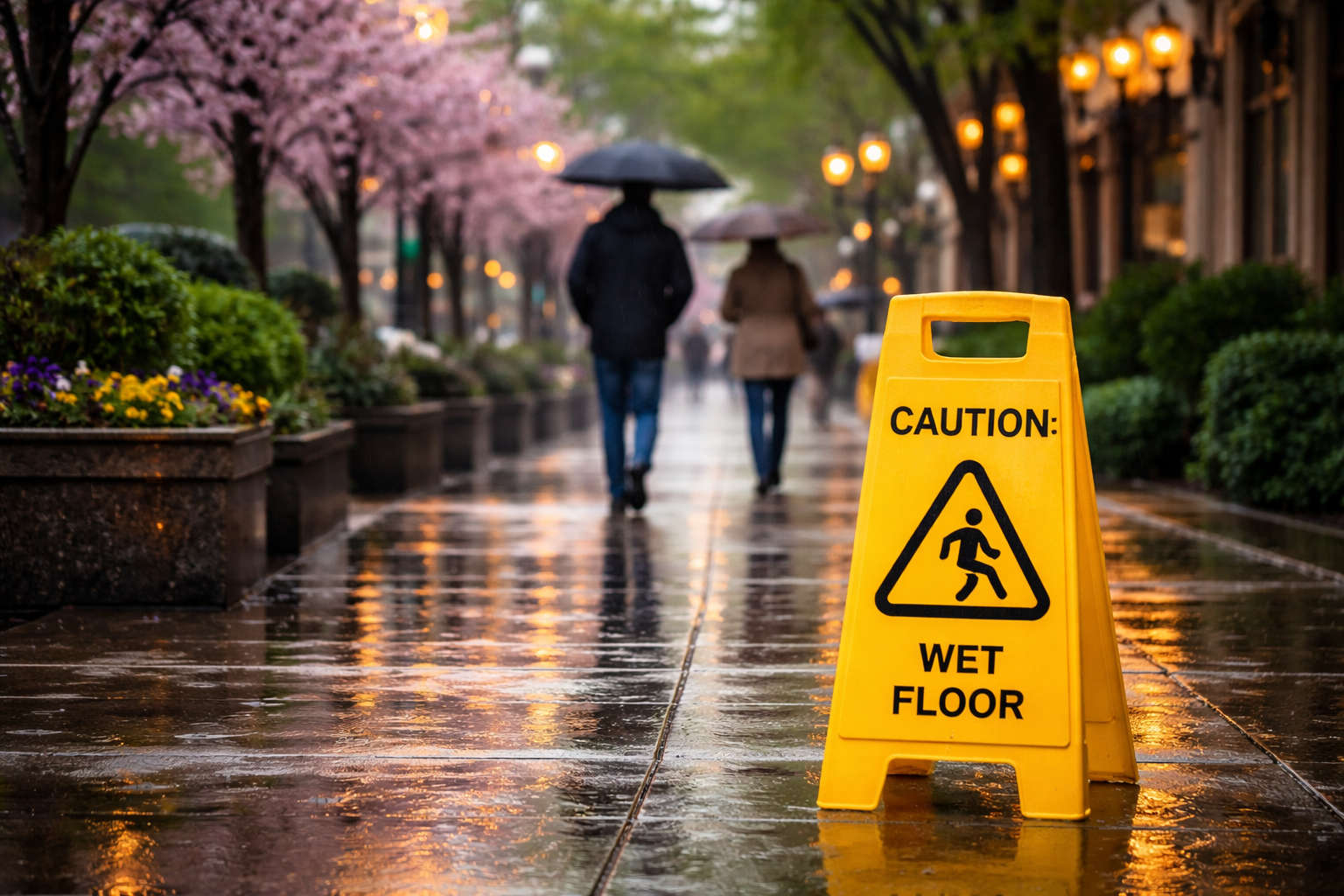
The causes of springtime slip-and-fall injuries often stem from environmental conditions that are not immediately obvious. Melting snow can create patches of ice hidden beneath slush or leaves, making sidewalks treacherous. Rain can create slick surfaces, particularly on smooth concrete, tile, or metal grates. Additionally, winter’s toll on sidewalks often leaves cracks, potholes, or uneven surfaces that become more dangerous when wet. In commercial areas, puddles forming near entrances or in parking lots increase the risk of injury. Even small items like leftover gravel, mulch, or tree debris can contribute to falls if left unaddressed. Business owners, municipalities, and homeowners each have a legal duty to manage these hazards and ensure that their properties are safe for visitors. Failing to do so can result in liability if an accident occurs.
Determining Liability in New Jersey
Liability for slip-and-fall accidents in New Jersey is influenced by several factors, including property ownership, knowledge of the hazard, and the specific circumstances of the fall. New Jersey follows a comparative negligence system, meaning that fault can be shared between the injured party and the property owner. The key elements often considered in determining liability include whether the property owner knew or should have known about the hazardous condition, whether reasonable steps were taken to address it, and whether the hazard was adequately marked or warned about. For example, if a homeowner failed to remove ice from their walkway or a business neglected to place a wet floor sign after cleaning, these actions could be considered negligent.


Residential Property Liability
Homeowners are expected to maintain safe conditions for guests and invitees. Liability arises if a fall occurs due to conditions that the homeowner failed to address, such as snow or ice accumulation, cracked or uneven walkways, or improperly applied salt or sand that creates a slipping hazard. Even when the homeowner takes some steps to maintain safety, liability may still exist if those measures are insufficient or poorly executed. For instance, clearing only a narrow path through snow while leaving adjacent areas slippery can result in an accident for someone who steps off the cleared path. Freeman Law Center, LLC emphasizes that homeowners must proactively anticipate potential hazards during seasonal transitions and act promptly to prevent injuries.
Commercial Property Liability
Business owners have a heightened duty of care toward customers, often facing stricter standards of liability than residential property owners. Commercial property must be maintained to ensure that customers can safely navigate entrances, sidewalks, and parking areas. Hazards such as wet floors, loose mats, puddles, or ice patches that have not been addressed may constitute negligence. In addition, businesses should have documented maintenance procedures and timely responses to hazardous conditions. If a customer slips on a wet floor that lacks proper signage or on a patch of ice that could have been treated, the business could be held liable for resulting injuries.
Municipal Liability and Public Property
Municipalities in New Jersey are responsible for maintaining certain public spaces, including sidewalks, streets, and parks. Liability for slip-and-fall accidents on public property is more complex, as governmental entities enjoy limited immunity under state law. To establish liability, a plaintiff generally must show that the municipality had prior knowledge of the hazard or that the danger was obvious and could have been reasonably prevented. Repeated complaints or visible hazards that are ignored can strengthen a case against a municipal entity, but claims often require detailed documentation and legal expertise to navigate successfully.
Mr. Freeman represented me in a child custody case during the beginning of difficult times of Covid. As a father, I was at first worried about what the outcome of the case Maybe. However, Mr. Freeman assured me he would get me my rights.
Thanks to knowledgeable Mr. Freeman and his professional staff, I was granted my rights. Cindy & Mr. Freeman were able to answer all my questions without delay. Highly recommend!
SAM BEAST
If you need a great family lawyer I recommend the freeman law center without hesitation. My life was a complete shambles because of the divorce I had to go through I didn’t know that i could feel so bad. The efforts that I received from Brian was outstanding and I can’t put in words how much I appreciated the way I was treated by his staff.
Their slogan “Quality and Commitment” was not just words it was action.
RON THATCHER
Documenting the Incident
Proper documentation is essential in proving a slip-and-fall claim. Injured individuals should take photos of the scene, including any hazardous conditions, damaged surfaces, or inadequate warnings. Recording the time, date, and weather conditions helps establish context. Collecting witness statements and preserving any relevant surveillance footage can support the claim. Additionally, prompt medical evaluation is crucial for documenting injuries, even if they initially appear minor. Freeman Law Center, LLC advises clients to maintain detailed medical records and receipts to substantiate claims for medical expenses and other damages.
Filing Claims and Pursuing Compensation
Once a slip-and-fall injury occurs, consulting a qualified attorney can help navigate the complex claims process. Freeman Law Center, LLC assists clients in identifying responsible parties and pursuing compensation for:
- Medical expenses, including treatment, rehabilitation, and follow-up care.
- Lost wages due to time missed from work.
- Pain and suffering resulting from physical and emotional impact.
- Property damage, if personal belongings were damaged during the fall.
A knowledgeable attorney can investigate the circumstances, gather evidence, and negotiate with insurers to ensure fair compensation. In cases where settlement negotiations are unsuccessful, legal representation in court may be necessary to protect the injured party’s rights and achieve a favorable outcome.
Preventative Measures for Property Owners
Preventing slip-and-fall accidents is key to reducing liability. Property owners should regularly clear snow, ice, and debris from walkways and parking areas. Applying ice melt or sand to slippery surfaces, repairing cracks or uneven sidewalks, and using appropriate signage to warn of wet or icy conditions are effective strategies. Businesses and homeowners alike should have clear maintenance protocols and promptly respond to hazardous conditions, especially during seasonal transitions in spring when weather patterns can change rapidly.
Realistic Case Outcomes
Slip-and-fall cases vary widely depending on the nature and extent of injuries, the degree of negligence, and the documentation available. Settlements typically cover medical expenses, lost wages, and compensation for pain and suffering. Freeman Law Center, LLC has successfully assisted clients in securing fair outcomes, including negotiating with insurance companies and representing clients in court when necessary. While each case is unique, a thorough approach to evidence collection and legal advocacy increases the likelihood of a favorable resolution.
Spring weather in New Jersey presents significant risks for pedestrians due to melting snow, rain, and residual winter hazards. Understanding who may be liable for slip-and-fall injuries requires careful consideration of property ownership, maintenance responsibilities, and state laws. Freeman Law Center, LLC provides experienced guidance for anyone injured under these circumstances, ensuring that rights are protected and compensation is pursued effectively. Prompt legal consultation, proper documentation, and a proactive approach to evidence collection are essential steps in addressing slip-and-fall incidents and securing recovery.
If you have been injured in a slip-and-fall accident in New Jersey, do not wait to seek legal guidance. Freeman Law Center, LLC offers a free consultation to evaluate your case, investigate potential liability, and pursue compensation for your injuries. Protect your rights and ensure your claim is handled by experienced attorneys who understand New Jersey personal injury law.
Disclaimer
This information is provided for general guidance and is not a substitute for personalized legal advice. Consult an attorney for advice regarding your specific situation.